
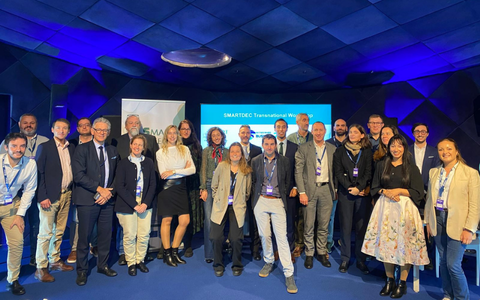
SMARTDEC Transnational Workshop at Business2Sea 2025
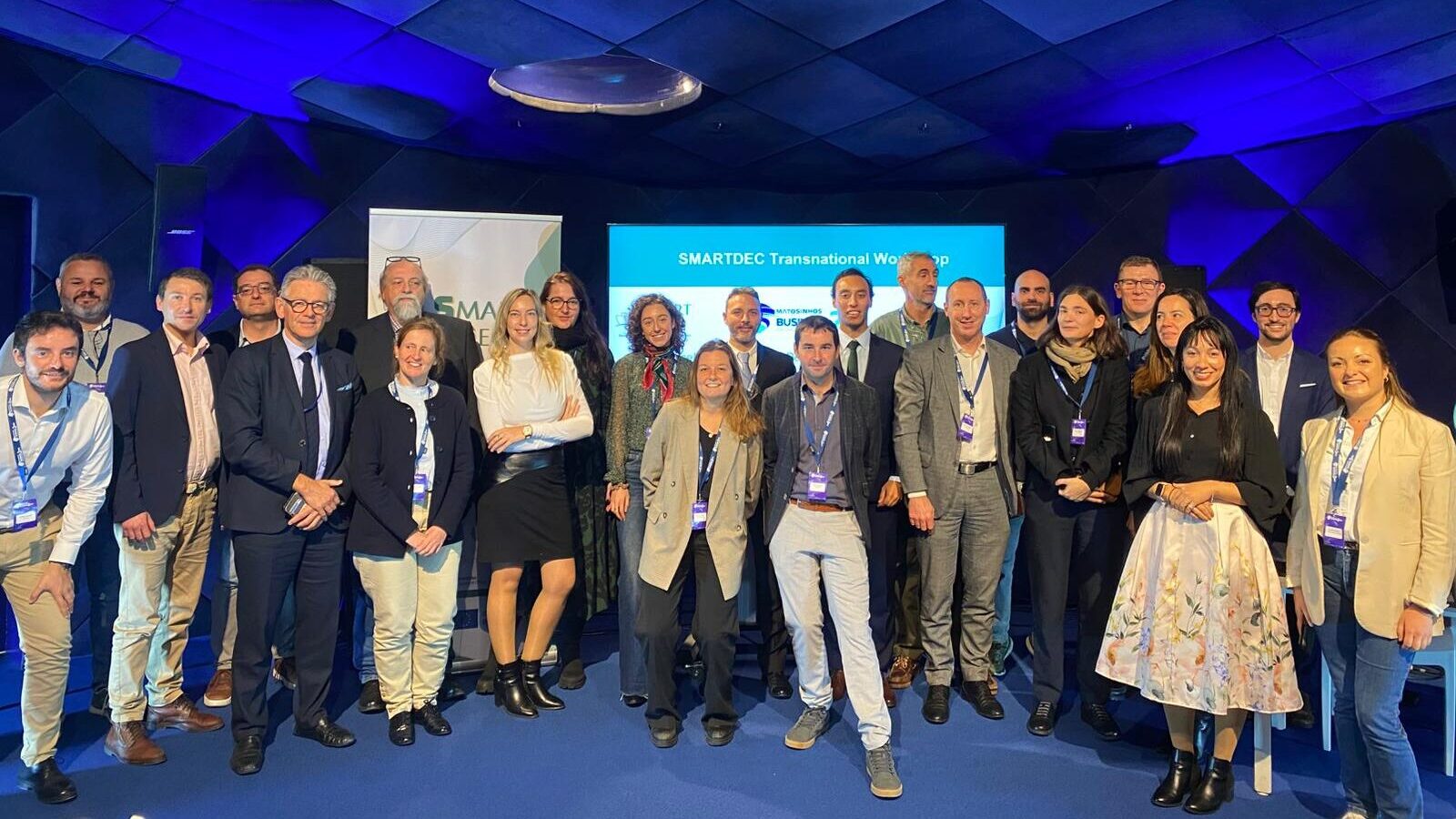
SMARTDEC held its first transnational workshop at Business2Sea 2025, bringing together innovation providers, experts and maritime stakeholders to explore practical pathways for decarbonising the Atlantic maritime sector.On 25 November 2025, the SMARTDEC consortium held its first transnational workshop during the Business2Sea event in Porto. The session brought together a wide range of Atlantic actors – from ports and shipyards to SMEs, researchers and public authorities – all committed to exploring new ways of decarbonising maritime transport.
Sharing ideas and discovering new solutions
The workshop aimed to create a first structured exchange between technology providers and potential end-users. The goal was to better understand regional needs and gather feedback on a selection of promising decarbonisation technologies identified through the SMARTDEC Call for Innovations.
To introduce the session, SMARTDEC partners presented the project’s objectives and the results of the Call for Innovation. All technologies showcased during the workshop had been developed independently prior to the project and were recognised for their potential to support maritime decarbonisation in the Atlantic area. As part of their selection, these innovators now benefit from a one-year tailored support programme designed to help them refine their business models, strengthen technological readiness and explore opportunities for collaboration with end-users.
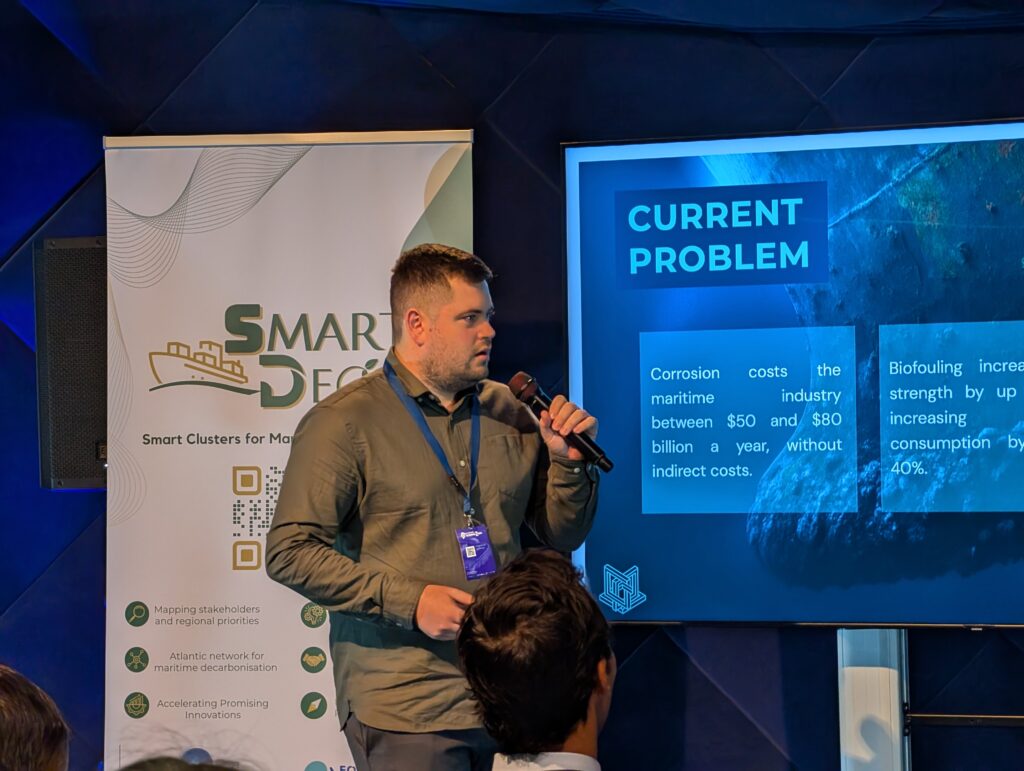
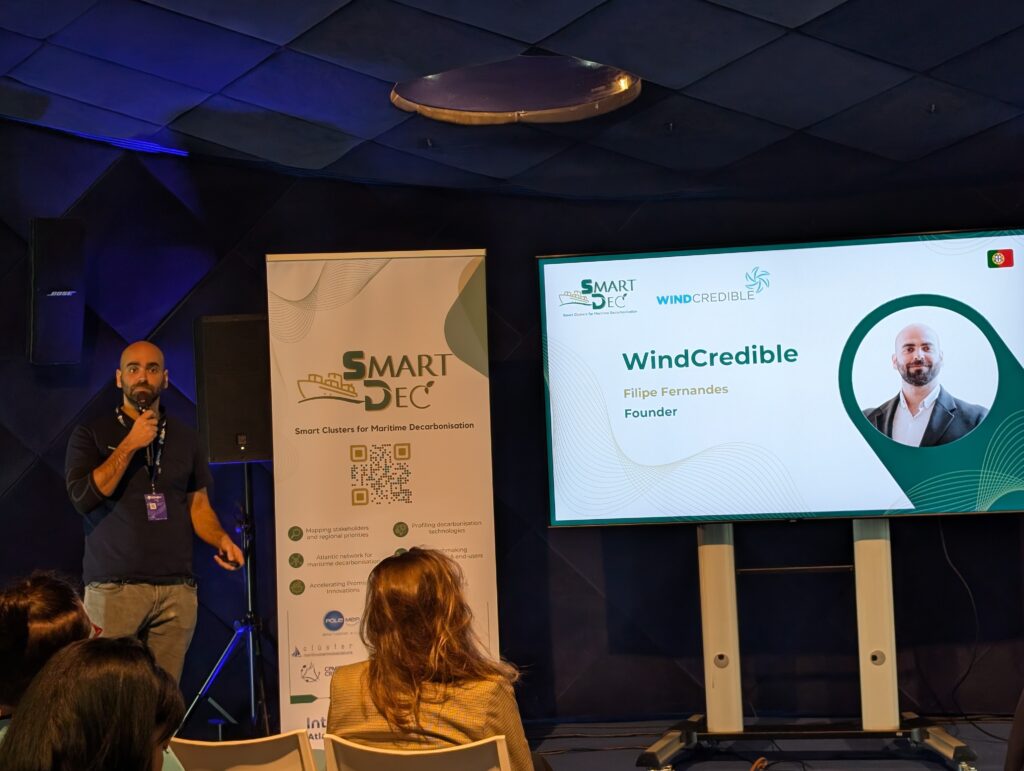
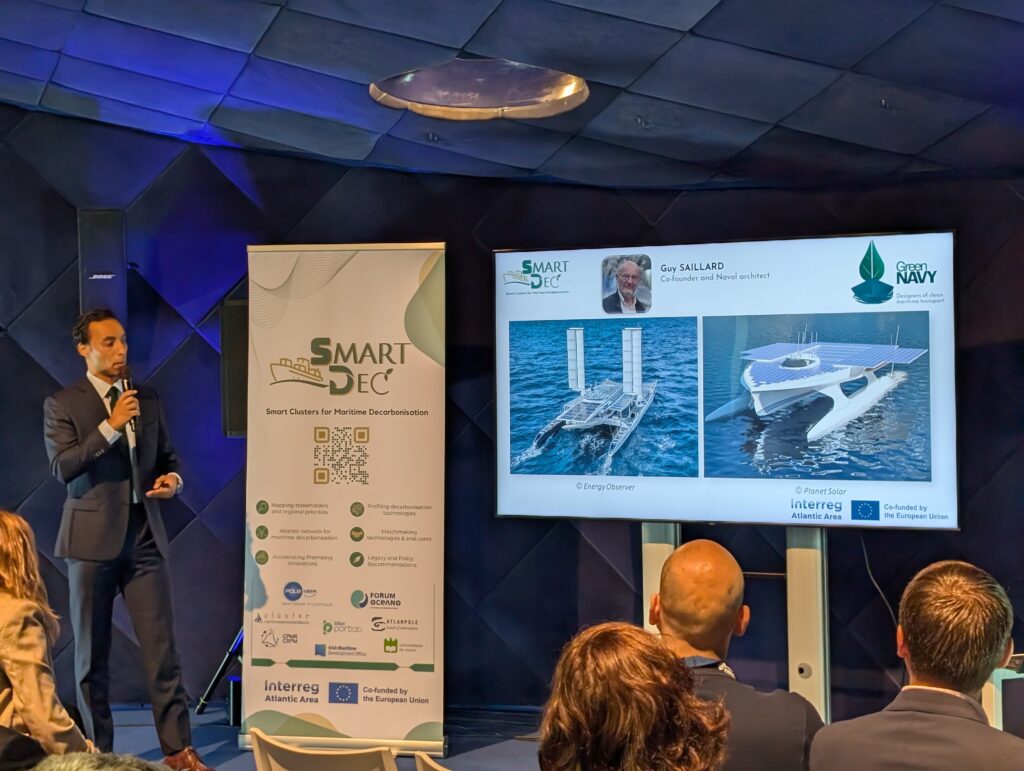
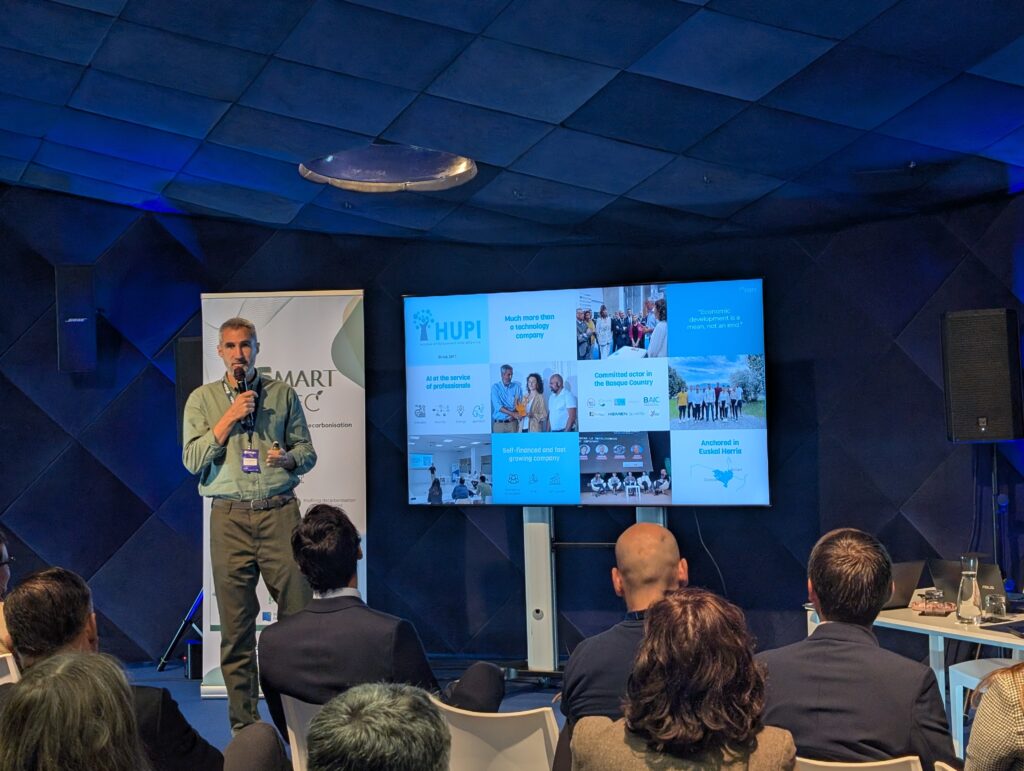
This introduction led to a dynamic series of pitches. Nine innovators presented their solutions, illustrating a diverse set of approaches – from alternative propulsion systems to AI-based optimisation tools and port electrification technologies.
The technologies and representatives who presented were:
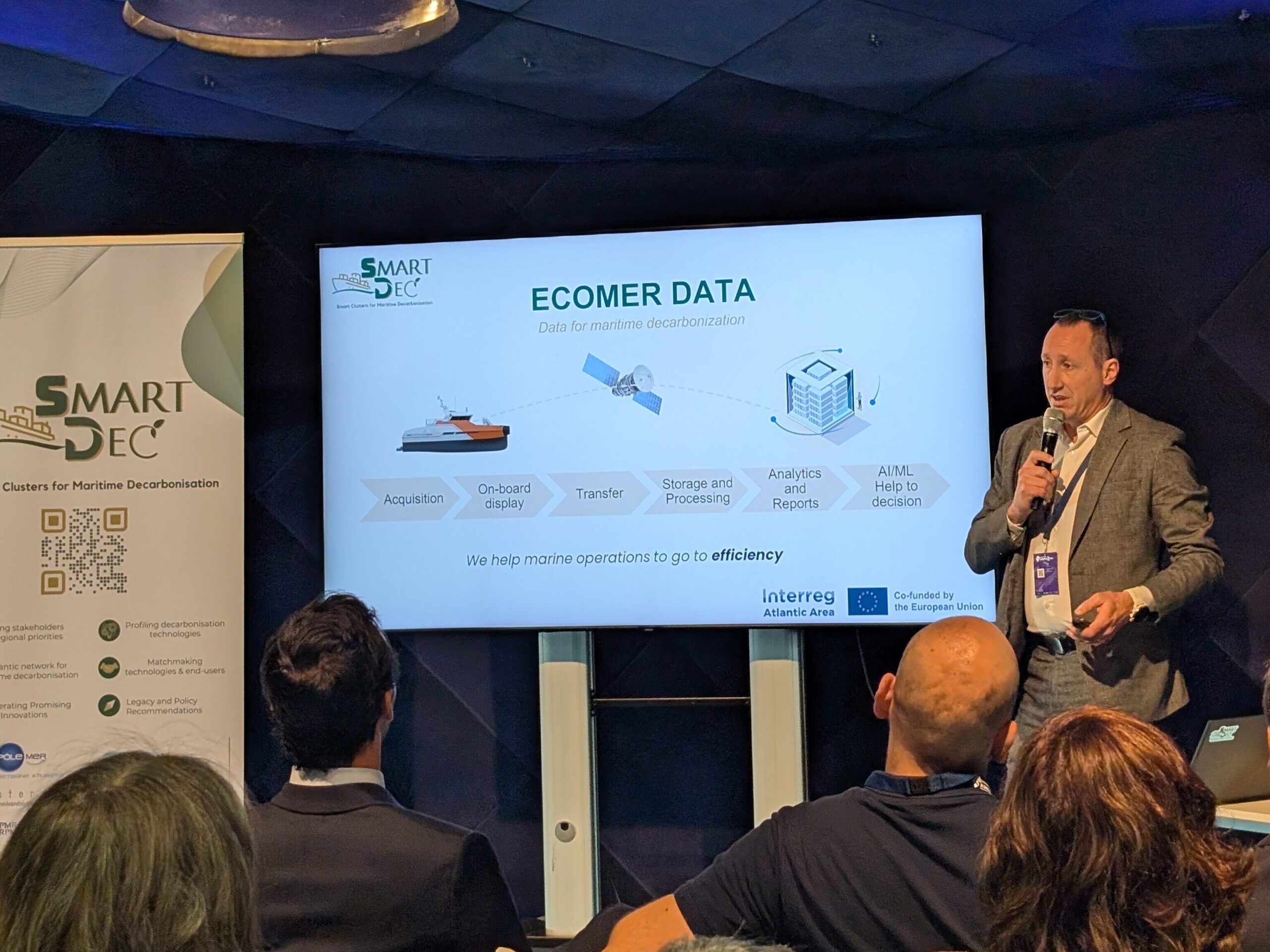
- Onboard fuel monitoring system – Olivier Capelle, Ecomer Data (FR)
- Electric and hydrogen-powered catamarans – Charles Cardi, Green Navy (FR)
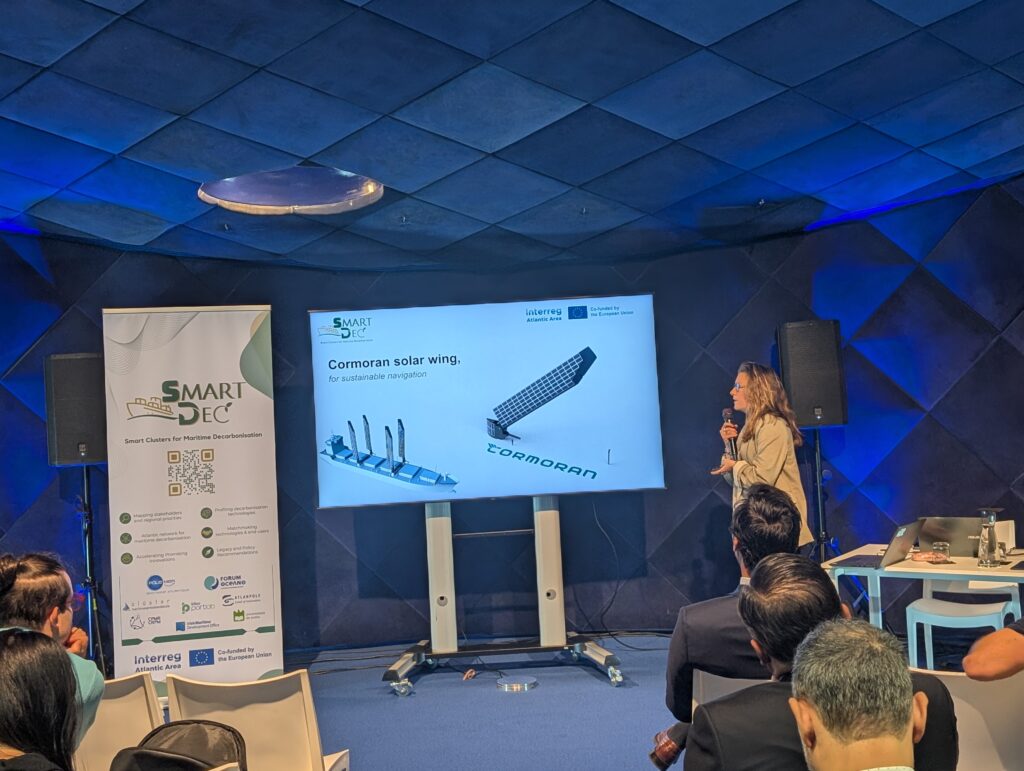
- Hybrid solar and wind wing – Marine Rialan, Cormoran (FR)
- Real-time port operations optimisation with AI and satellite imagery – Irati Rodriguez, Inguru Predict and Romain Roquefer (ES)
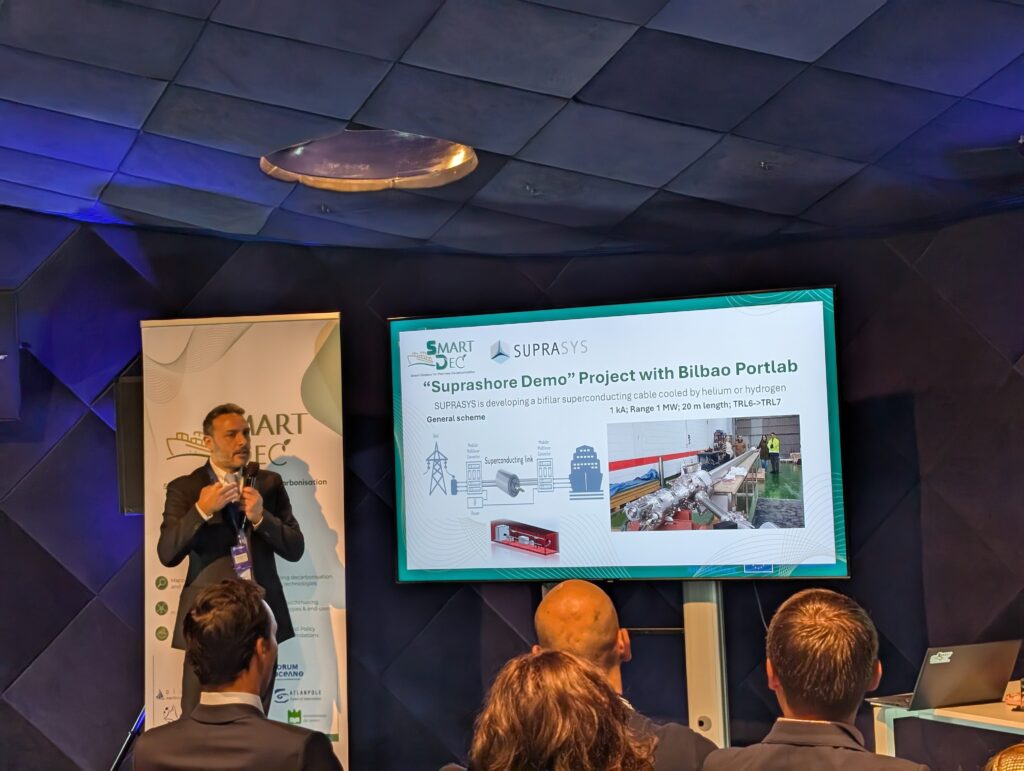
- MW-range power transmission for port electrification – Endika Perez Vidal, Suprasys (ES)
- Smart preventive maintenance using AI and robotics/USVs – David Pinto Fernández, EONsea (ES)
- Compact and silent micro wind turbine system – Filipe Fernandez, Windcredible (PT)
- Pilot use of HVO alternative fuel for quayside generators – ATU , represented by Paul Brewster from IMDO (IE)
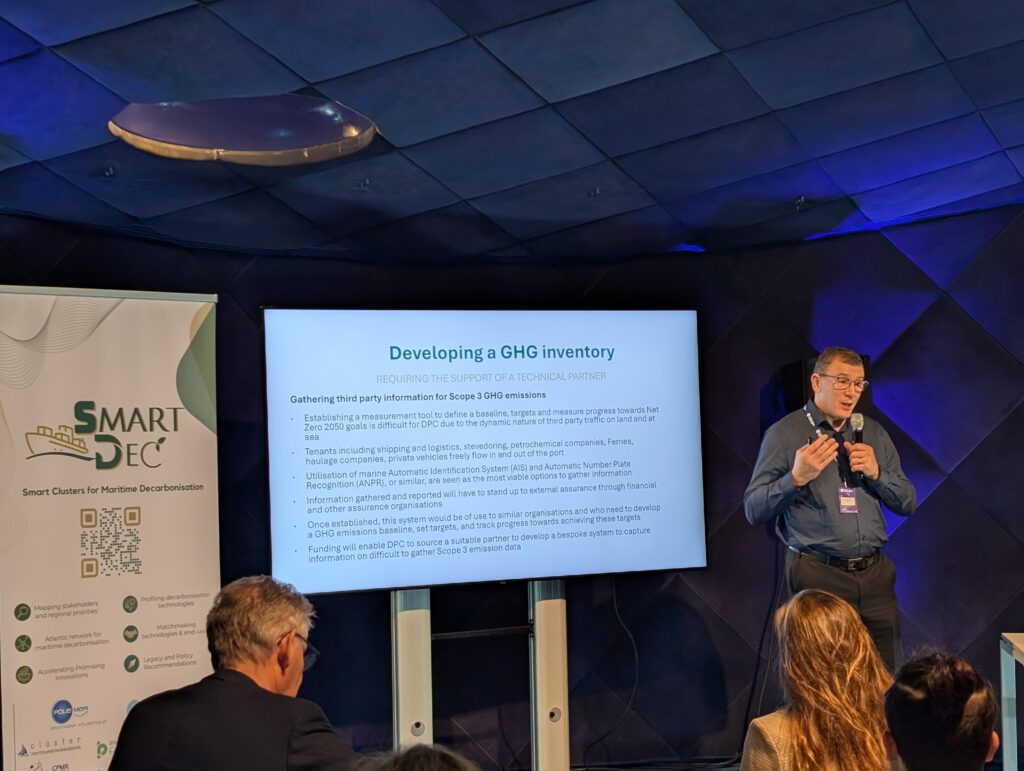
- Monitoring and reducing port-related emissions – Dublin Port Company, represented by Paul Brewster from IMDO (IE)
A constructive and engaging discussion
The presentations were followed by a lively and constructive discussion. Participants expressed strong interest in practical solutions capable of reducing emissions and improving operational efficiency. They also highlighted several key factors for successful adoption, including the need for clear business cases, real-world pilot projects and better awareness of regional differences in infrastructure and regulations.
Ports, in particular, were seen as essential enablers, providing the facilities and operational environments needed to test and scale new technologies. The discussion also demonstrated a strong appetite for cooperation and knowledge exchange across the Atlantic area.
A workshop that fully met expectations
More than 40 participants attended the session, representing a broad range of expertise and professional backgrounds. Their active engagement led to several high-quality exchanges, and the atmosphere throughout the session was both dynamic and positive. Speakers also expressed their satisfaction with the level of interaction and the relevance of the feedback received, confirming the value of gathering such a diverse community of maritime stakeholders.
Acknowledgements
In addition to the wider public who attended the workshop, the session also welcomed several invited experts whose presence was particulary valued by the consortium. Although attending as part of the audience, these experts contributed perspectives that enriched the discussions and complemented the input provided by participants from various backgrounds.
The invited experts included:
- Bureau Veritas – Marine & Offshore (FR/INT) – an international classification society providing certification, technical expertise and safety standards for the maritime sector.
- TECNALIA Research & Innovation (ES) – a leading Spanish research centre specialising in industrial innovation, energy transition and advanced technologies.
- Orkestra – Basque Institute of Competitiveness (ES) – a research institute focused on regional competitiveness, innovation and economic transformation.
- Tecnoambiente (ES) – a consultancy specialising in marine environmental services, environmental impact assessments and offshore monitoring.
- Wavelength (UK) – an advisory firm supporting maritime organisations with decarbonisation strategies and innovation pathways.
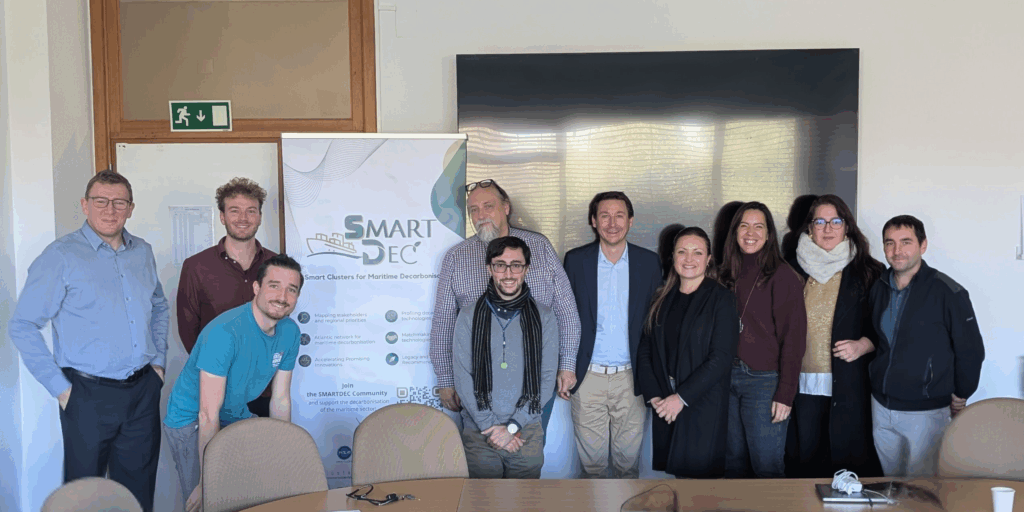
A productive follow-up in Aveiro
The day after the workshop, SMARTDEC partners met at the University of Aveiro for the project’s General Assembly. This meeting allowed partners to review progress, plan upcoming events and continue developing the SMARTDEC Community Platform. It also helped maintain the positive momentum created during Business2Sea.