
Maritime decarbonisation: SMARTDEC sets course in Brest
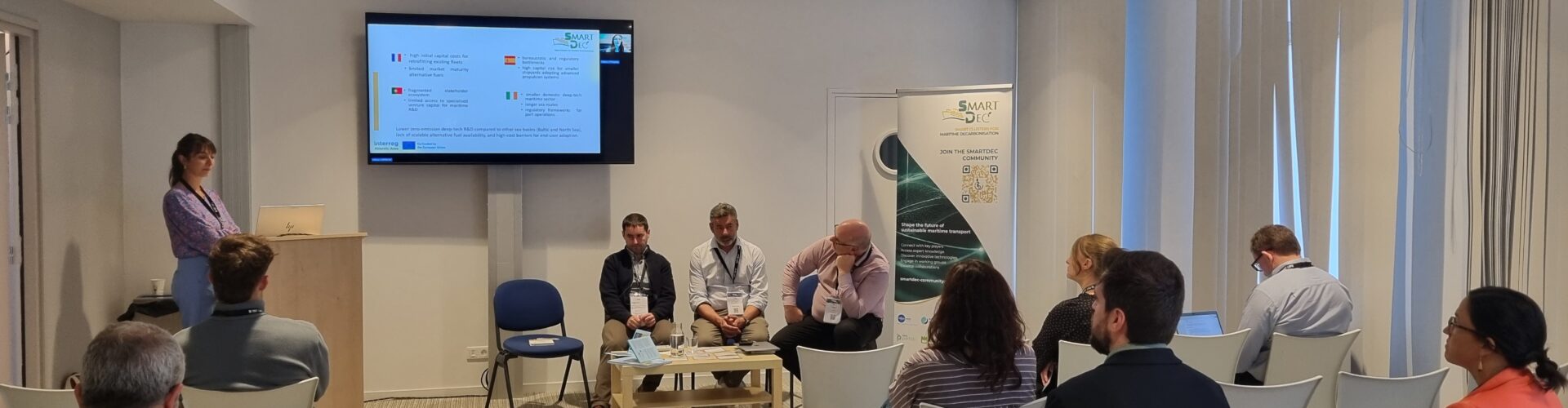
On October 8, SMARTDEC held a workshop during the Sea Tech Week. A presentation of innovative solutions supported by the project, and the prioritisation of policy recommendations for public decision-makers.As part of Sea Tech Week®, an international meeting place for maritime innovation, the SMARTDEC consortium held a workshop dedicated to the decarbonisation of maritime transport in Europe. Coordinated by the Pôle Mer Bretagne Atlantique and co-funded by the Interreg Atlantic Area programme, the SMARTDEC (Smart Clusters for Maritime Decarbonisation) project has been bringing together players from industry, research, public authorities and civil society from Ireland, France, Portugal and Spain since January 2024 in order to accelerate and coordinate the adoption of decarbonised technologies by the maritime transport sector.
This day had a double objective: to present the solutions “made in EU Atlantic” supported by the SMARTDEC acceleration programme, and to prioritise policy recommendations for public decision-makers to remove the obstacles to the deployment of these innovations on a larger scale.
Pure Glide and SOLARPAQ
Among the winners of the accelerator program, Pure Glide and SOLARPAQ stood out.
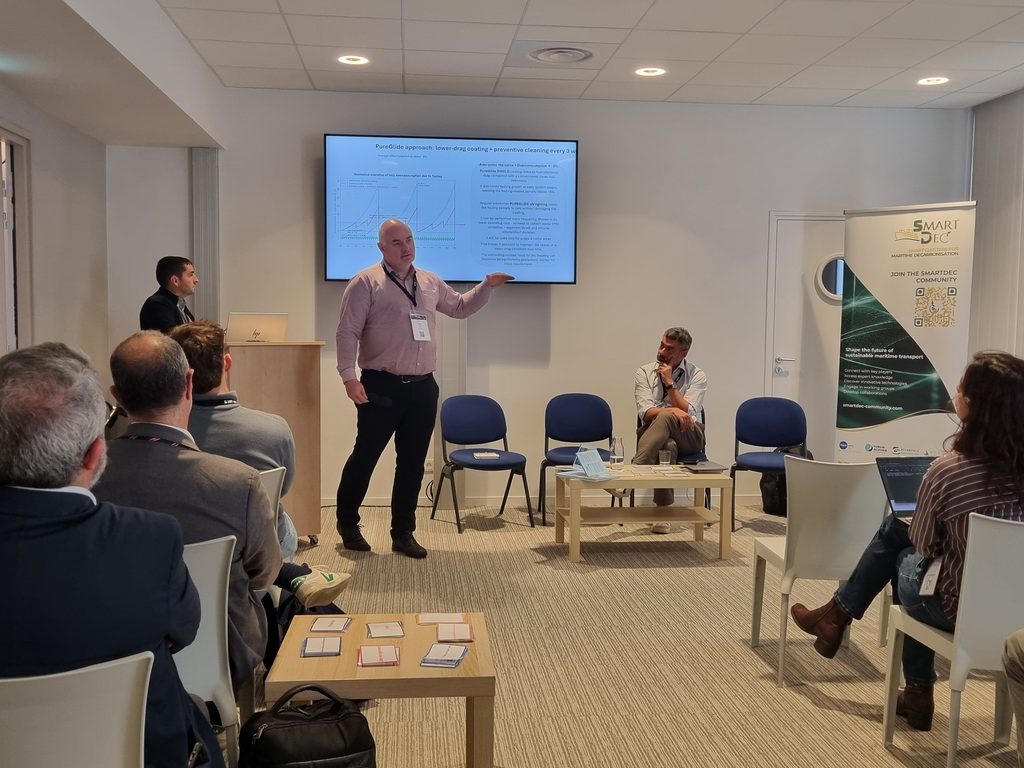
Pure Glide is an innovation dedicated to the removal of biofouling, the accumulation of marine organisms on ship hulls. This is far from an anecdotal issue: hull fouling increases hydrodynamic drag, forces ships to consume more fuel and therefore emit more CO2, while promoting the transfer of invasive species from one ecosystem to another. The solution developed by Pure Glide offers a more efficient and environmentally friendly approach than traditional hull cleaning methods. By facilitating the removal of biofouling without damaging the coatings, it contributes directly to the energy performance of fleets.
SOLARPAQ tackles an often-overlooked link in the decarbonisation chain: the energy supply of port areas. This innovation proposes a system combining solar energy production and storage, specifically designed for port environments. The approach enables the supply of clean electricity for dockside operations, all in a format adapted to the space and operating constraints of the terminals.
Selected among the 11 innovations selected during the SMARTDEC call for innovations, Pure Glide and SOLARPAQ benefit from tailor-made support aimed at strengthening the technological and commercial maturity of the two solutions and preparing its demonstration to end users, ports and shipowners, in the Atlantic area.
Three main policy priorities for the decarbonisation of maritime transport
At the heart of the workshop, participants were invited by the Conference of Peripheral Maritime Regions to debate and prioritise around twenty policy recommendations from the project. Three of them were selected as priorities:
1. Channelling funding from the Emissions Trading System (ETS).
By allocating the revenues of the maritime ETS to the decarbonisation of the sector, Europe would guarantee secure and sustainable financing, by reinvesting funds that are precisely intended for the green shipping effort.
2. Make ports hubs of the energy transition.
Decarbonisation requires coordinated and synchronised investments: ports must anticipate their technical choices (alternative fuels, electrification) in a complex and uncertain environment, while shipowners depend on the availability of these port infrastructures to make their own green investments. This “chicken and egg” dilemma calls for continuous and informed communication between stakeholders to ensure the coherence and effectiveness of the decarbonisation trajectory.
3. Support start-ups and SMEs through “living labs” and create Maritime Industry Valleys.
The availability of ships and ports for full-scale demonstrations is a major bottleneck: ships in commercial operation struggle to host technology tests that could disrupt their day-to-day operations. Providing real sites for experimentation is a key condition for the adoption of innovative solutions located in Europe.
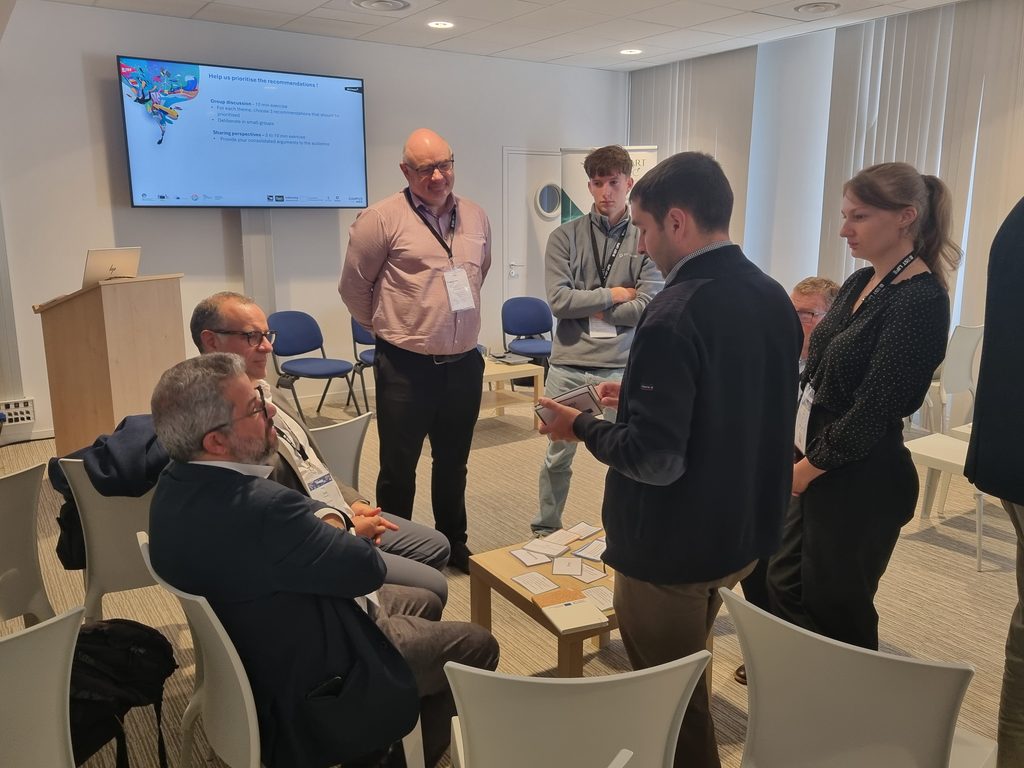
Other recommendations also garnered strong support, including those related to regulatory stability, financing aligned with economic realities, support for small and medium-sized ports, the development of green corridors and robust monitoring of emissions.
Heading for 2027
These recommendations constitute a concrete roadmap for translating SMARTDEC’s work into public action. The consortium is now preparing the final phase of the project, with a European restitution event scheduled for December 2026. Sea Tech Week has shown that in Brest, as on the entire Atlantic coast, the decarbonisation of the maritime sector is no longer a promise: it is a collective project, now with its own priorities.