
SMARTDEC Workshop at Sea Tech Week: Discussing a Common Approach to Maritime Decarbonisation in the Atlantic Area
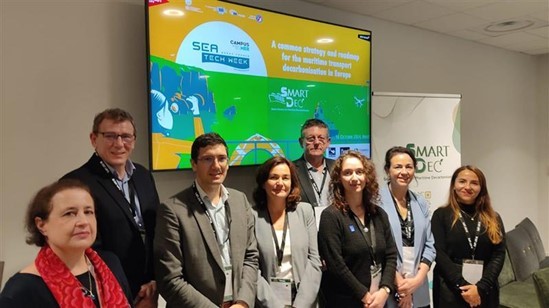
SMARTDEC gathered stakeholders from across the Atlantic Area to discuss maritime transport decarbonisation during Sea Tech Week 2024.Held during Sea Tech Week in Brest on 16 October 2024, the SMARTDEC workshop brought together key stakeholders from across the Atlantic Area to discuss maritime transport decarbonisation. Participants exchanged views on technological, regulatory and financial challenges, while exploring opportunities for greater cooperation and innovation across the region.
A Workshop Dedicated to Maritime Decarbonisation
SMARTDEC (Smart Clusters for Maritime Decarbonisation) is funded by the Interreg Atlantic Area Programme for the 2024–2026 period. The project aims to accelerate the adoption of decarbonisation technologies in the maritime transport sector by coordinating regional efforts to reduce emissions and strengthen innovation capacities across the Atlantic Area.
As part of Sea Tech Week, the workshop focused on the obstacles to be overcome and the solutions required to meet growing demands for CO₂ emissions reduction.
Representatives from Across the Maritime Ecosystem
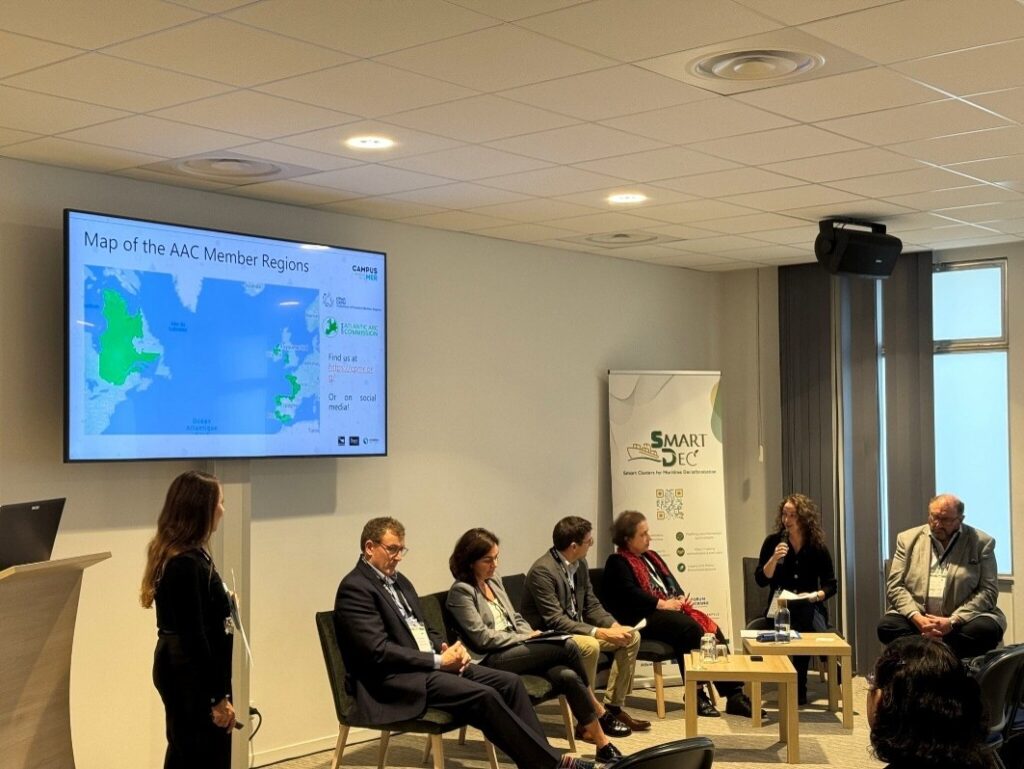
The session brought together representatives from public institutions, industry organisations and European networks:
- Isabelle Perret, Directorate-General for Maritime Affairs, Fisheries and Aquaculture and Chair of the Atlantic Strategy Group;
- Mathilde Maur, Policy and Project Officer at the Conference of Peripheral Maritime Regions (CPMR);
- Caroline Neumann, Deputy Head of the Ship Safety and Ecological Transition Department at the French Ministry for the Sea;
- Timothée Moulinier, Delegate for Research & Development, Innovation and Digital Affairs at GICAN;
- Paul Brewster, Department of Transport and representative of the Irish Maritime Development Office (IMDO);
- Jerry Hallissey, Business Development Director at Shannon Foynes Port, Ireland.
The discussion was moderated by Juliana Carvajal, European Affairs Manager at Pôle Mer Bretagne Atlantique.
Main Messages from the Discussion
Following an introduction to SMARTDEC and its objectives, participants presented their organisations’ initiatives and exchanged views on the challenges associated with reducing emissions from maritime transport.
Several common themes emerged. Despite ongoing initiatives at European level, significant technological, legislative and financial barriers remain. Participants highlighted the need for a shared vision and coordinated action throughout the supply chain to support the transition.
The consolidation of European value chains was identified as a strategic issue, particularly as European shipowners increasingly turn to non-European suppliers. In this context, European funding was highlighted as an important tool for strengthening local competitiveness.
Roadmaps, Policies and Cooperation
Caroline Neumann presented the French roadmap for maritime decarbonisation, developed jointly by the French Maritime Cluster and public and private stakeholders. The roadmap includes measures tailored to different vessel types and addresses energy, technological and regulatory issues.
Participants also emphasised the importance of engagement with European institutions to support the deployment of green technologies, as well as the value of learning from international experiences and existing good practices.
Exploring Practical Solutions
An interactive session gave participants the opportunity to further discuss practical actions and the importance of establishing clear links between technologies and their end users.
The exchanges highlighted the variety of challenges facing the sector, as well as the need for continued cooperation between the different actors involved in maritime decarbonisation.
Next Steps
The discussions continued through a subsequent online workshop entitled “Decarbonisation Technologies for Maritime Transport in the Atlantic Area”, held on 14 November 2024. The event will explore in greater detail the technologies that can contribute to reducing emissions in the maritime transport sector.